Compressed air filter elements are a consumable. Unlike the stainless-steel housings that hold them, elements have a defined service life — and running past it costs far more than the element itself. Whether you are operating a 10 kW workshop compressor or a 500 kW central plant, the elements sitting inside your filter housings have a finite capacity for capturing particulate, coalescing oil aerosols, and adsorbing hydrocarbon vapours. When that capacity is exhausted, the element does not simply stop working — it begins to fail in ways that damage downstream equipment and contaminate your product.
This guide covers exactly when to replace each grade of element, the tell-tale warning signs that you have left it too long, and how to reduce element costs by 30–50% without any compromise in filtration performance. Indian operating conditions — high ambient dust, temperature swings, and compressor oil carryover from older machines — make timely element replacement even more critical than it is in milder climates.

Planned filter element replacement prevents unplanned downtime and protects downstream equipment throughout your compressed air system.
How Filter Elements Fail
Particulate elements — P grade (3 micron) and R grade (1 micron) — fail by gradual blockage. Dust, pipe scale, and compressor wear debris build up progressively within the filter media, increasing the differential pressure across the element with every hour of operation. At a certain point, the pressure drop becomes economically significant: for a 200 kW compressor system, every 100 mbar of additional differential pressure costs approximately ₹80,000–1,20,000 per year in extra electricity at Indian industrial tariff rates. A heavily blocked particulate element operating at 300–400 mbar above its clean condition can add ₹2,40,000–4,80,000 per year to your energy bill — for a ₹1,500 element that should have been changed at 12 months.
Coalescing elements — M grade (0.1 micron) and S grade (0.01 micron) — fail differently and more dangerously. The coalescing media saturates over time as it accumulates oil that the drainage system cannot remove fast enough, or as the media fibres degrade. When this happens, the element begins releasing retained oil droplets back into the airstream as a fine mist — the opposite of its intended function. Critically, this oil carryover occurs without any significant change in differential pressure. A saturated coalescing element can read a perfectly normal 50 mbar pressure drop on its gauge while passing oil at concentrations 10–50 times higher than its rated performance. You will not see it on any instrument until product defects appear downstream.
Activated carbon (ACS) elements deplete by adsorption saturation — the activated carbon granules or impregnated media have a fixed pore volume for capturing hydrocarbon vapour molecules. Once those pores are full, the element passes oil vapour through the filter housing as if it were not there. Like coalescing element failure, ACS depletion produces no differential pressure warning. The only indication is smell — and in food, pharmaceutical, or painting applications, even detecting it at that point may mean a batch rejection or a rework of finished product.
Standard Replacement Intervals
The manufacturer standard is clear: replace all compressed air filter elements every 12 months or 8,000 operating hours — whichever comes first. This applies to all grades from all major brands including Parker Domnick Hunter, Ultrafilter, Atlas Copco, Kaeser, and Omega Air. The 12-month calendar interval exists because even at low utilisation, element media degrades through humidity cycling, temperature fluctuation, and cumulative micro-contamination that does not register on a differential pressure gauge.
| Element Grade | Standard Interval | Indian Condition Adjustment |
|---|---|---|
| P (3 µm particulate) | 12 months / 8,000 hrs | 6–9 months in high-dust environments (construction sites, cement plants, mining areas, stone-cutting workshops) |
| R (1 µm particulate) | 12 months / 8,000 hrs | 12 months if the upstream P element is maintained correctly and replaced on schedule |
| M (0.1 µm coalescing) | 12 months / 8,000 hrs | 12 months — do not extend beyond this regardless of differential pressure readings |
| S (0.01 µm coalescing) | 12 months / 8,000 hrs | 12 months — non-negotiable in pharmaceutical, food, and electronics applications |
| ACS (activated carbon) | 6 months | 6 months — carbon depletes through adsorption regardless of visible contamination or pressure readings; never extend to 12 months |
Warning Signs You've Left It Too Long
Ideally, element replacement is a scheduled activity — carried out at a planned maintenance window before any of the following signs appear. If you are seeing any of these indicators, the element is already past its service limit and should be replaced without delay.
The particulate element is fully blocked. The system is wasting significant energy — at this level of pressure drop, a 100 kW compressor system is burning an extra 7–10 kW continuously. Contamination breakthrough risk is high. Replace the element today, not at the next planned maintenance.
A new element is white or off-white. If the element removed at service is yellow, brown, or black, it has been holding heavy contamination load. This is your signal to increase to 6-monthly replacement intervals — the element was approaching or at capacity before you changed it.
Visible oil misting or staining on pipe joints, fittings, pneumatic equipment, or the inside of tubing downstream of a coalescing filter means the element has failed and is releasing oil back into the system. The element needed replacing before this happened — and downstream equipment should be inspected for damage.
A hydrocarbon or oily odour from compressed air outlets downstream of an ACS filter means the carbon is exhausted and passing vapour through. This is especially dangerous in food processing, pharmaceutical blister packing, PET bottle blowing, and spray painting. Immediate replacement is required — do not continue production.
Oil contamination in pneumatic circuits causes solenoid valve stiction, cylinder seal degradation, directional control valve failure, and — in finishing or food applications — direct product contamination. If you are seeing unexplained failures in pneumatic equipment or product quality issues, trace the root cause to your filtration system before assuming the equipment itself is at fault.
The Real Cost of Skipping Element Replacement
The energy cost alone justifies annual element replacement. A blocked P element adding 200 mbar of additional pressure drop on a 100 kW compressor system wastes approximately 4 kW continuously — at Indian industrial electricity rates of ₹7–8 per kWh, that is ₹85,000–1,00,000 per year for a single element set. A 250 kW system with three filter stages each running at elevated differential pressure can easily waste ₹3,00,000–5,00,000 per year in avoidable energy costs — every year the elements are not replaced.
Equipment damage costs dwarf the energy waste. A single seized pneumatic actuator costs ₹8,000–50,000 to replace, plus the cost of downtime. A contaminated directional control valve or proportional valve on a critical machine can cost ₹20,000–1,50,000. In food or pharmaceutical manufacturing, an oil contamination incident — even one detected internally — typically means scrapping a batch, deep-cleaning pipework and equipment, and potentially suspending production for an audit. The cost of a full recall triggered by a contamination complaint runs into crores.
The economics are straightforward: a full set of filter elements for a medium industrial system costs ₹3,000–15,000. The cost of one contamination-related equipment failure is 5–30× that. The cost of a product recall or a food safety incident is 100–1,000× that. There is no economic argument for skipping or delaying element replacement — only the appearance of short-term saving that rapidly becomes a much larger long-term cost.
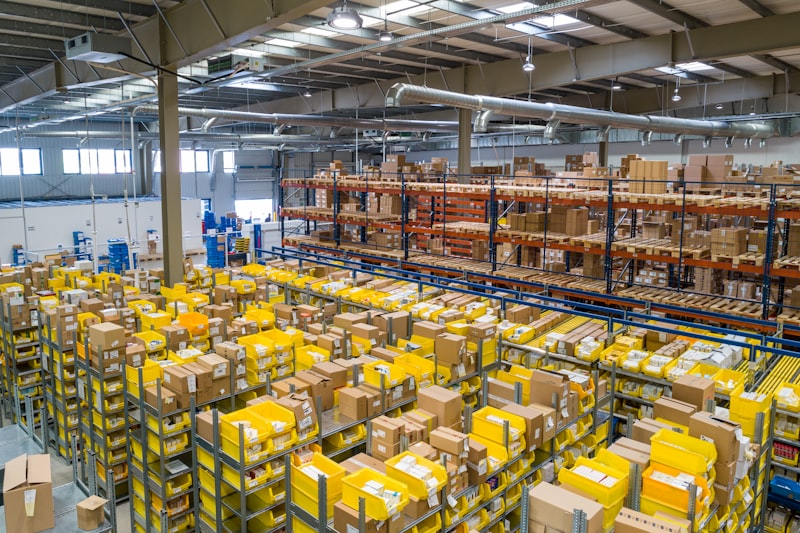
Food production lines are particularly vulnerable to oil contamination breakthroughs — annual replacement of coalescing and carbon elements is non-negotiable.
OEM vs OEM-Equivalent Elements — Save 30–50%
OEM filter elements from Parker Domnick Hunter, Atlas Copco, Kaeser, and Ultrafilter are manufactured to tight specifications — and priced accordingly. Indian industrial buyers regularly pay a significant premium for the OEM brand name when equivalent filtration performance is available at 30–50% lower cost. OEM-equivalent elements from Omega Air are produced using the same grade filtration media — glass microfibre for coalescing stages, depth-filtration media for particulate stages, and activated carbon granules for ACS stages — tested and rated to ISO 8573-1, and delivering identical downstream air quality when correctly installed and maintained on schedule.
Nitrogenium Innovations stocks the full Omega Air equivalent range for the four major brands installed across Indian industry: Parker Domnick Hunter (AO/AA/ACS, sizes 005–200), Ultrafilter / Donaldson (PE/FF/MF/SMF/AK, sizes 02/05 through 30/50), Atlas Copco (DD/PD/UD/QD, normal series 9–850F and Plus series 10+–550+F), and Kaeser (E-B through E-G, sizes 6–283). All elements are supplied with documentation confirming ISO 8573-1 compliance. Same-day delivery is available across Delhi NCR for standard sizes.
| OEM Original | Omega Air Equivalent | Saving vs OEM |
|---|---|---|
| Parker 025 AO | ODHE 025 AO/XM | ~35% |
| Parker 025 AA | ODHE 025 AA/XS | ~40% |
| Atlas Copco DD 60 | OAC 60 DD/XM | ~45% |
| Kaeser E-E-48 | OKA 48 E-E/XM Al | ~40% |
| Ultrafilter MF 05/25 | ODO 0525 XMF Al | ~38% |
A Practical Annual Replacement Checklist
Use this checklist as the basis for your annual compressed air filter maintenance procedure. Print it, add it to your maintenance management system, or pass it to your service team. The goal is to make element replacement a routine, planned activity — not an emergency response.
- Note your compressor run-hour meter reading and the date of the last element replacement — confirm whether the 12-month or 8,000-hour limit will be reached first
- Order replacement elements 2–4 weeks before the due date to allow for delivery, stock confirmation, and any back-order contingency
- Schedule the replacement during a planned maintenance shutdown or low-production period — not as an emergency response to a differential pressure alarm or contamination event
- Record the differential pressure reading at the time of replacement and note the colour and condition of the removed element — this tells you whether the current 12-month interval is correct or whether it should be reduced
- Inspect filter housings, body seals, and O-rings while the elements are out — replace any O-rings showing deformation, cracking, or compression set
- Test automatic condensate drain valves — actuate the manual override to confirm they are not blocked with sludge or scale, and clean or replace as required
- Update your maintenance log with the element grade, size, supplier part number (Omega Air equivalent or OEM), date of replacement, and compressor hours at replacement
Ready to order replacement elements? Share your existing element part number or compressor make and model — we'll identify the correct Omega Air equivalent and confirm stock within 30 minutes.